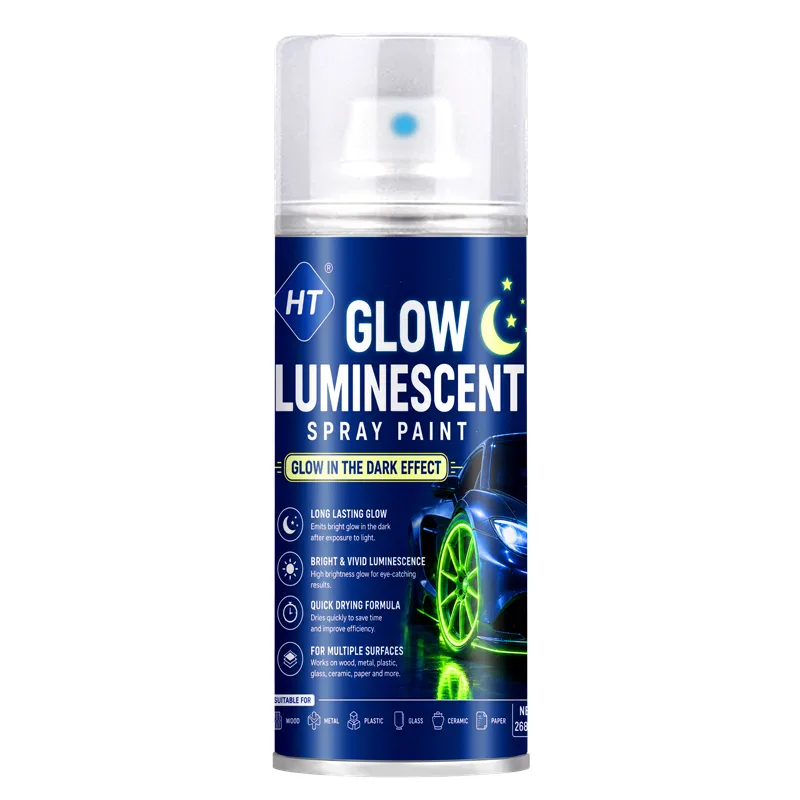
What is the difference between fluorescent and glow-in-the-dark spray paint?
Fluorescent (neon) spray paint contains pigments that absorb UV light and re-emit it at a longer wavelength, creating bright, vivid colors that stand out in daylight. Glow-in-the-dark (luminescent) spray paint contains phosphorescent pigments — typically strontium aluminate — that absorb light energy and release it slowly in darkness.
Key differences:
• Fluorescent paint: Visible only under UV or bright daylight. Fades under normal indoor lighting. • Glow-in-the-dark paint: Charges under any light source, glows for 6-12 hours in darkness. • Some products combine both: fluorescent pigment for daytime visibility + phosphorescent pigment for nighttime glow.
For B2B buyers, understanding this distinction matters when specifying products for safety signage (needs both day/night visibility) vs decorative applications (daytime pop only).
What industries use fluorescent and luminescent spray paint?
These specialty coatings serve several high-value B2B markets:
• Safety and hazard marking: Fire exits, emergency routes, stairwells, and hazardous zones require glow-in-the-dark markings per OSHA and ISO 3864 standards. • Transportation: Road marking, airport runway indicators, and rail switch markers use fluorescent and luminescent coatings for visibility. • Construction: Concrete expansion joints, scaffolding markers, and underground utility markers. • Marine and outdoor: Buoy markers, dock edges, and trail markers for low-visibility conditions. • OEM product lines: Specialty retailers and brand owners developing neon or glow product lines for consumer or trade markets.
The global safety signage market alone exceeds $5 billion annually, with luminescent materials growing at 8-10% CAGR through 2030.
What should you look for when sourcing fluorescent spray paint from an OEM?
When evaluating an OEM partner for fluorescent or luminescent spray paint, focus on these specifications:
• Pigment quality: Strontium aluminate is the industry standard for glow pigments — it outperforms older zinc sulfide formulas by 10x in brightness and duration. Ask for the specific phosphor grade. • UV stability: Fluorescent pigments are inherently UV-sensitive. A quality formulation includes UV stabilizers to extend color life from weeks to months. • Base compatibility: The product must work on your target substrates — metal, plastic, concrete, or fabric. Multi-surface capability is a plus. • VOC compliance: Specialty pigments don't exempt you from regulations. Ensure the formulation meets EPA, REACH, or CARB standards for your target market. • Shelf life: Luminescent pigments can settle. A stable suspension formula with proper agitation instructions ensures 24-36 month shelf life.
Always request sample batches before committing to production. Test brightness decay curves (how fast the glow fades) and color saturation under both daylight and UV conditions.
How do you apply glow-in-the-dark spray paint for maximum brightness?
Application technique directly affects glow performance:
• Surface preparation: Clean, dry, and primed surfaces are essential. Dark primer (black or dark gray) enhances glow brightness by preventing light absorption by the base color. • Charge source: Direct sunlight charges fastest and brightest. Artificial light (fluorescent tubes, LED) also works but takes 2-3x longer for equivalent brightness. • Layer count: Apply 3-4 thin coats rather than one thick coat. Each layer adds phosphor density. Allow 10-15 minutes between coats. • Topcoat consideration: A clear topcoat protects the finish but can reduce glow by 20-30% if too thick. Use a thin, high-transparency clear coat only if needed. • Storage after charging: Glow intensity peaks immediately after charging and drops rapidly in the first 30 minutes, then stabilizes for several hours.
For industrial applications, spec a minimum glow duration (e.g., 8 hours visible after 10 minutes of charge) and test to ASTM E2073 standards.