Why is a washdown area harder than a wet area?
The chemistry does the damage, and frequency amplifies it:
- Caustic detergents, acid descalers, peracetic acid, and chlorine-based sanitizers, often applied in sequence over the same surface.
- Temperature swing: hot cleaning water or steam followed by a cold rinse, which stresses film and substrate.
- High-pressure water that finds any pinhole or unsealed joint and works it open.
- Mechanical abuse from kegs, pallets, trolleys, and scrubbing, plus impact at drain edges.
- Organic soil that hides coating damage until a hot rinse lifts it.
A waterproof coating will fail here; the specification is built against the actual chemicals, their concentration, contact time, and temperature.
Why do coatings fail in these areas?
Five recurring causes, in order of frequency:
- Pinholes at welds, sharp edges, and fixings. One uncoated edge gives caustic a path under the film, and the failure spreads.
- Moisture vapour in the concrete slab. A floor can blister with no chemical exposure at all when vapour drive pushes from below.
- Thermal shock at drains, steam lines, and equipment plinths, where hot and cold zones meet in one film.
- Application over contaminated substrates: soil and curing compounds stay invisible until hot water lifts the coating in sheets.
- Incomplete coverage behind fixed equipment, where nobody can inspect or repair the result.
Almost every washdown failure traces to preparation and detailing, not to the resin.
How should the system be selected?
Start from the chemical list, then the physical demands:
- List every chemical with concentration, contact temperature, and dwell time. Splash exposure and continuous immersion are different specifications.
- Match the system to that list. Many epoxies handle caustic and moderate acid; aggressive hot acid or solvent streams need different chemistry, and sometimes no standard coating suits that stream.
- Decide slip resistance and cleanability together: a floor can be too smooth to be safe or too rough to be hygienic.
- Check slab and substrate condition first - moisture, spalling, delaminated tile - because no system compensates for a failed substrate.
- Plan the offline window and odour or VOC constraints, which in a live plant often decide the product more than chemistry does.
Selection is a document, not a preference.
What hygiene and compliance requirements affect the choice?
The coating has to serve the cleaning regime as well as survive it:
- Surfaces must be smooth and cleanable, without joints or ledges that trap soil; grout lines and movement joints need detailing, not more coats.
- Drain details and coving matter more than the flat floor area, because that is where water and soil collect.
- Repair damaged substrate first: coating over spalled concrete or lifted tile transfers the problem into the new system.
- Refrigeration and freezer rooms need low-temperature cure products and different environment control.
- Approval sits with food safety and QA, so expect to supply data sheets, chemical resistance information, and application records.
What about walls, steelwork, and equipment?
Floors get the attention, but the rest of the room fails too:
- Wall and ceiling panels, including insulated panel repairs, where a damaged skin needs sealing rather than a cosmetic coat.
- Support steel, handrails, ladder cages, door frames, and machine frames, which corrode in the same humid chemistry.
- Pipework, hangers, and supports, where identification marking must be replaced after maintenance.
- Equipment touch-up on trolleys, racks, and pallets, where a fast-cure aerosol keeps a piece in service instead of out for a day.
- Floor zones and hazard marking, which keep the plant legible to everyone in it.
Never spray near open product, exposed packaging, or live food contact surfaces; scheduling coating work around production is part of the specification.
What should a facility specify and stock?
Specify enough that the outcome is verifiable:
- Chemical resistance data tied to the actual chemicals, with concentration, temperature, and contact time.
- Preparation standard and dry film thickness, which decide whether the specified resistance is achieved.
- Slip rating per floor zone, cure time, and return-to-service conditions.
- Documentation for QA: product data, batch records, thickness readings, and photographs of detailing.
- One qualified product family held consistently, so repairs in three years match the original installation.
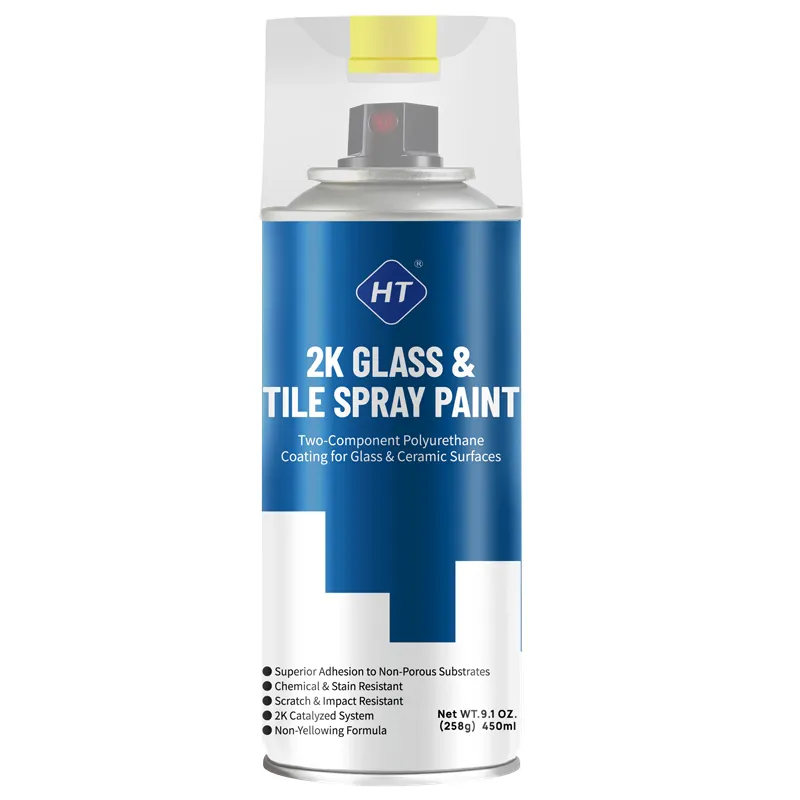
For non-floor work our range covers HT-031 epoxy primer and HT-027 hard-wearing topcoat on steelwork, HT-022 for tile and glass surfaces, and HT-012 for zone marking, in aerosol formats suited to touch-up inside a live plant. For hot caustic or hot acid immersion streams, verify service limits with us before specifying - where a standard system will not hold, we say so rather than sell into a callback.