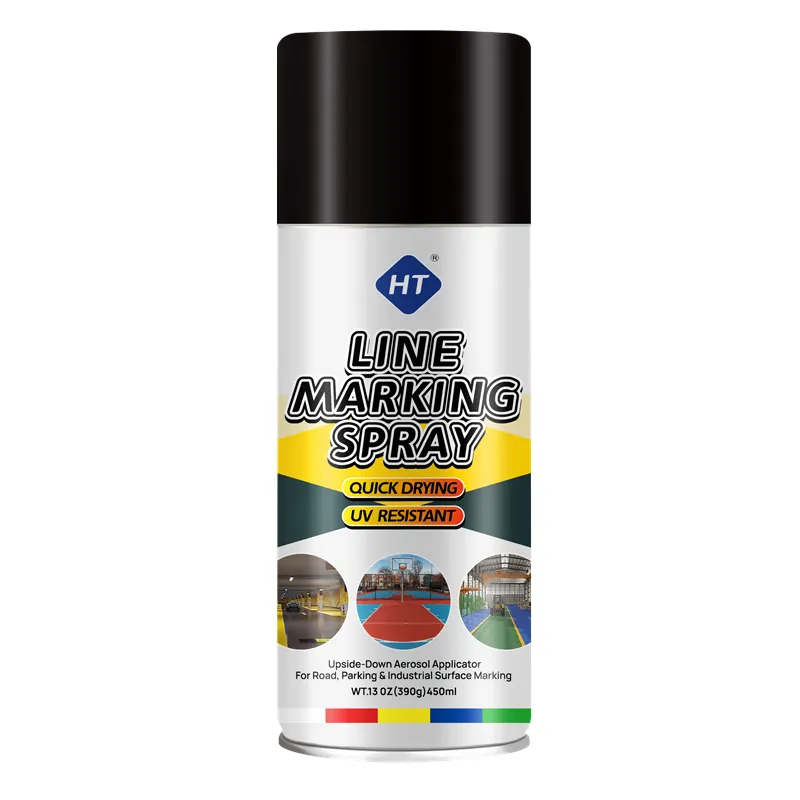
What types of traffic marking spray paint are available?
Traffic marking spray paint falls into several categories based on application and performance requirements:
• Water-based acrylic: The most common type for temporary and indoor markings. Low VOC, fast drying, easy to apply. Ideal for warehouse floor lines, parking lots, and construction zones. • Solvent-based alkyd: Higher durability for semi-permanent outdoor markings. Better adhesion to asphalt and concrete. Used for road shoulders, bike lanes, and utility markings. • Thermoplastic: Heated and applied as a molten material. Reflects retroreflective glass beads for night visibility. Used for permanent road center lines and crosswalks. (Not typically in aerosol format.) • Two-component epoxy: High-performance floor markings for industrial facilities requiring chemical resistance and heavy traffic durability. • Aerosol convenience format: Pre-mixed, ready-to-spray cans for touch-up work, small area marking, and situations where bulk equipment isn't practical.
For B2B buyers, the aerosol format serves a specific niche: maintenance crews, contractors doing touch-up work, and small-volume users who don't need bulk equipment.
What regulations govern traffic marking paint?
Traffic marking paint is one of the most regulated spray paint categories. Key standards include:
• MUTCD (Manual on Uniform Traffic Control Devices): US federal standard governing road marking colors, retroreflectivity, and placement. White for lane lines, yellow for center lines, red for fire lanes. • ASTM D6628: Standard specification for color of traffic marking materials. • ASTM D711: Standard test method for solids content of traffic paint. • AASHTO M 249: Standard specification for white and yellow reflective pavement marking materials. • EN 1436 (Europe): Road marking performance requirements including night visibility, skid resistance, and durability. • VOC regulations: Many states and countries impose strict VOC limits on traffic marking paint — often 250-450 g/L for water-based formulations.
As an OEM manufacturer, your supplier must be able to produce formulations that meet the specific standards of your target market. A paint that meets MUTCD may not meet EN 1436 requirements.
What are the key performance specifications for traffic marking paint?
When specifying traffic marking spray paint, focus on these critical performance metrics:
• Retroreflectivity: Measured in mcd/lx/m². Highway markings typically require 150+ mcd/lx/m² when new. This is achieved by embedding glass beads into the wet paint. • Dry time: Fast-dry formulations set in 5-15 minutes for traffic areas. Slower drying in cold weather causes traffic disruption. • Adhesion: Must bond to asphalt, concrete, and existing markings without peeling. ASTM D3359 cross-hatch test rating of 4B or higher. • Durability: Traffic volume determines wear rate. Highways need 6-12 months minimum; warehouses need 2-5 years. • Wet-night visibility: Retroreflective beads maintain visibility under wet conditions. Premium formulations use wet-reflective beads. • Coverage: Typical aerosol coverage is 12-16 linear feet per can for a 4-inch line width.
For private-label or OEM orders, specify your target market's regulatory requirements and performance expectations upfront.
How do you apply traffic marking spray paint correctly?
Proper application ensures marking longevity and regulatory compliance:
• Surface prep: Clean the surface of debris, oil, and moisture. New asphalt needs 30+ days to cure before marking. Pressure washing or sweeping is recommended. • Environmental conditions: Apply between 50°F and 100°F (10°C to 38°C). Rain or high humidity (>85%) prevents proper adhesion and drying. • Application method: For aerosol cans, maintain 8-12 inches distance from the surface. Use steady, overlapping passes for consistent coverage. For straight lines, use a marking guide or stencil. • Glass bead application: For reflective markings, glass beads must be applied immediately after painting while the paint is still wet. The beads embed into the wet film and become retroreflective. • Dry time: Allow minimum 15-30 minutes before traffic. Heavy vehicles can displace paint that hasn't fully cured. • Touch-up schedule: Plan for periodic re-marking based on traffic volume. Industrial floors: 1-2 years. Roadways: 6-18 months.
OEM buyers should request application guidelines to include on product labels and technical data sheets.